European Union
What an EU importer must satisfy to place e-bike battery packs on the market: conformity, the Battery Regulation, and per-country producer registration.
- Who carries the obligation
- The EU importer or authorised representative
- Last reviewed
- August 2026
The obligation sits with you, not with us
This is the sentence most worth internalising before reading the rest. Under EU product law, duties attach to the economic operator placing goods on the market. When you import our packs into the EU, that operator is you.
A Chinese manufacturer cannot be the importer, cannot hold your registrations, and cannot sign your Declaration of Conformity. What we can do — and do — is supply the product-side evidence that makes your declaration defensible. Any supplier telling you their goods are “fully EU certified so you have nothing to do” is describing an arrangement that does not exist.
Three regimes, not one
Conformity and CE marking. A declaration you make, backed by a technical file. For a 36–52V pack the live rules are the EMC Directive and RoHS; the Low Voltage Directive starts at 75V DC and so covers the mains charger rather than the pack. The complete e-bike is CE-marked separately, normally against EN 15194. IEC 62133-2 reports are the usual evidence for the safety half of the file.
Battery Regulation 2023/1542. This replaced the old Batteries Directive and phases in over several years. It brings duties around labelling, carbon footprint declaration, recycled content, due diligence on raw materials, and end-of-life — and importantly, several of them attach to the importer. Our importer checklist goes through them.
Producer registration. WEEE and battery producer registration are national, not EU-wide. Selling into Germany, France, and the Netherlands means registering in each, with separate registries, reporting, and fees — and in several states an authorised representative if you have no local entity. Marketplaces now enforce this: no registration number, no listing.
Getting the goods there
Transport requires UN38.3 documentation and an SDS, and the SDS should be supplied in the languages your destination customs authorities accept. We provide English, German, French, and Chinese as standard.
Check the Incoterm too. DDP moves the freight and duty burden to us; it does not move producer registration or Battery Regulation duties, which follow the entity placing goods on the market regardless of who paid the carrier.
What we ship with an EU order
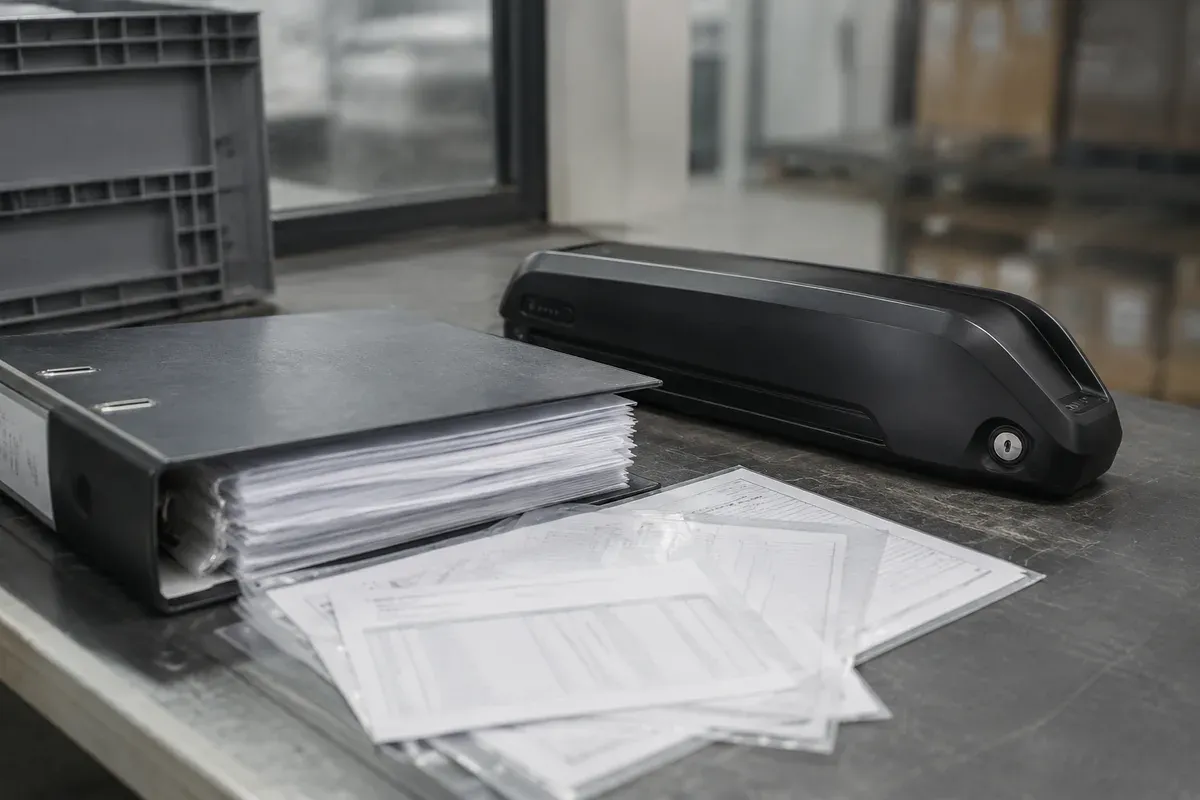
CE Declaration of Conformity for the pack, EMC and safety test reports, RoHS documentation, IEC 62133-2 report, UN38.3 test summary, and SDS. Material and weight data for your WEEE and battery registrations is available on request — ask for it before you register, not after.
Certifications relevant to EU
Conformité Européenne (EU Declaration of Conformity)
RoHSRoHS 3: Restriction of Hazardous Substances (2015/863/EU)
IEC62133IEC 62133-2:2017: Secondary cells for portable applications
UN38.3UN Manual of Tests and Criteria: Section 38.3
MSDS / SDSMaterial Safety Data Sheet (SDS: GHS format)
WEEEWEEE Directive: Waste Electrical and Electronic Equipment
Scope of this page
This is a manufacturer's working summary written for procurement teams, reviewed August 2026. It is not legal advice, and market access rules change — the EU Battery Regulation and US state-level requirements are both moving targets. Confirm current obligations with your compliance advisor or notified body before committing to a launch. We supply the product-side evidence; obligations that attach to the importer or the party placing goods on the market cannot be discharged by a supplier.
Shipping to EU?
Tell us the market and the pack specification. We confirm which documents ship as standard, which need advance scheduling, and what each costs you in lead time.