Separator
The thin porous membrane keeping a cell's electrodes apart while letting ions pass — the component whose failure causes an internal short.
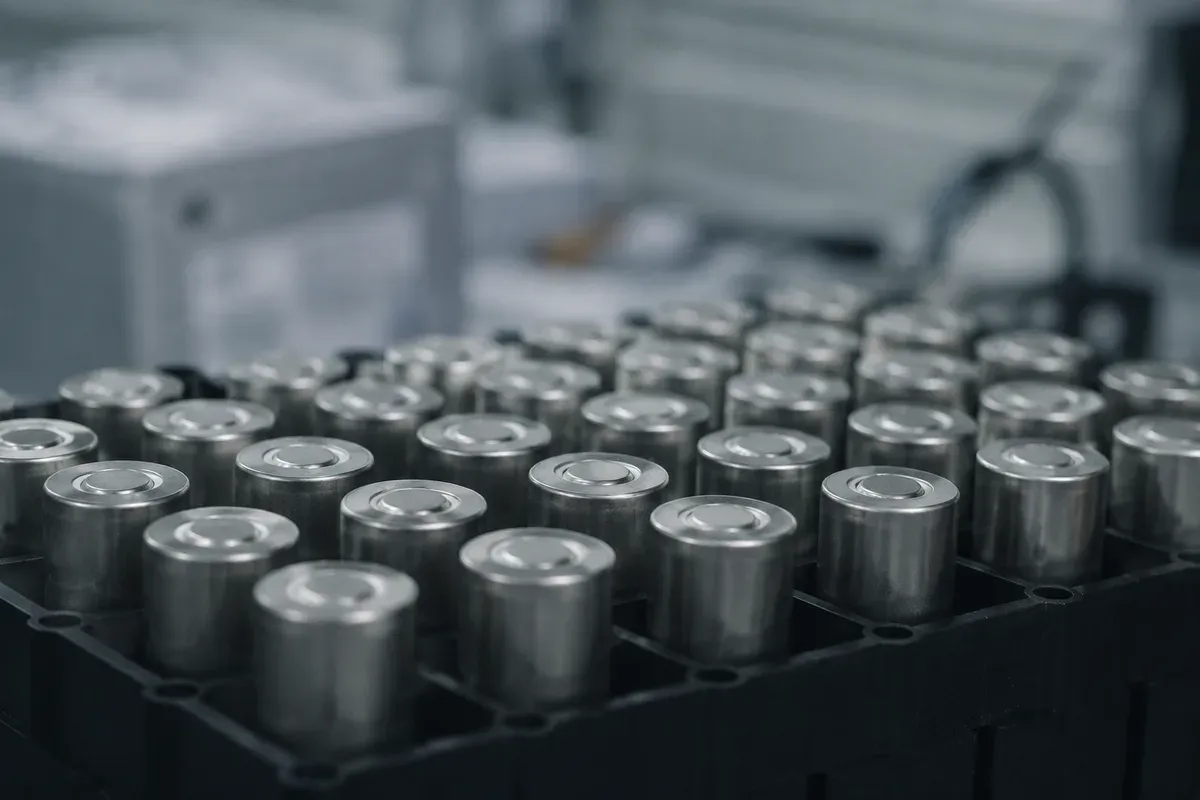
The thinnest critical part
Inside every lithium cell, a microporous polymer film sits between anode and cathode. It has to do two contradictory things at once: block electrical contact between the electrodes, and let lithium ions move freely through it.
It is measured in tens of micrometres. It is also the single component whose failure most directly causes catastrophic outcomes, because anode touching cathode is an internal short — the fastest route to thermal runaway.
How separators fail
Mechanical breach. Crush or puncture from an impact, or from a manufacturing defect such as a metal particle contaminating the electrode stack. This is why cell provenance matters so much and why counterfeit or reclaimed cells are dangerous in a way that has nothing to do with their capacity.
Dendrite penetration. Lithium plating grows structures that can pierce the membrane from the inside.
Thermal shrinkage. Polymer separators shrink at high temperature. Shrink far enough and the electrodes meet at the edges — which is precisely how a local hot spot escalates into a cell-wide failure.
Shutdown and ceramic coatings
Better separators are engineered to help. Shutdown separators are multi-layer: one layer melts and closes its pores at elevated temperature, blocking ion flow and halting the reaction before the higher-melting layer loses integrity.
Ceramic-coated separators add an inorganic layer that resists thermal shrinkage and mechanical puncture, holding the electrodes apart even when the polymer softens.
What a buyer can actually do
You will not specify a separator. It is inside the cell, chosen by the cell manufacturer, and not a line item you control.
What you control is which cells you buy, and separator quality is one of the invisible things you are paying for when you specify a tier-one manufacturer over an unbranded alternative at half the price. It does not appear on a capacity comparison, which is exactly why cheap cells look like a bargain on a spreadsheet.
See cell brands and grades for what the price difference actually buys, and cell traceability for proving what went into your packs.
Working on a pack specification?
Send us the voltage, capacity, current draw, and target markets. We reply with a specification you can review rather than a price with no working shown.