Energy Density (Wh/kg)
Energy stored per unit of mass or volume — the figure that decides whether a target capacity fits your frame and weight budget.
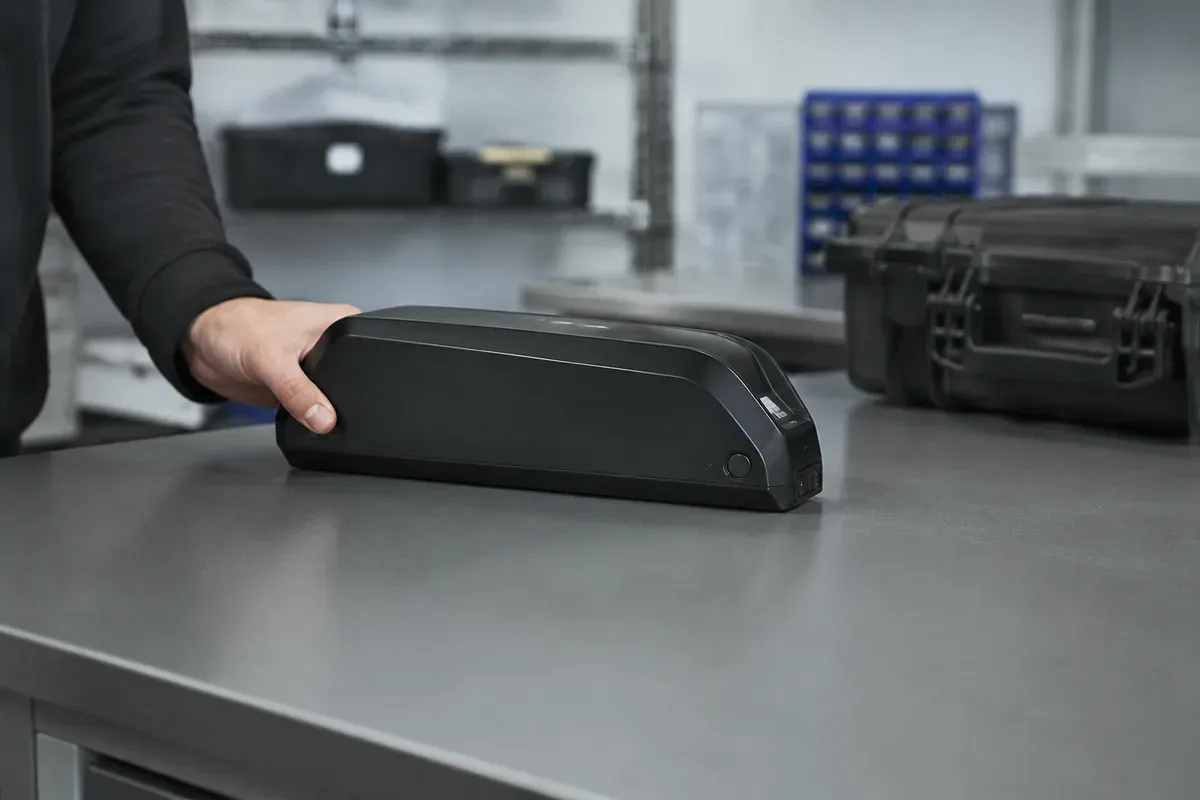
Two densities, both constraining
Gravimetric density is watt-hours per kilogram: how heavy the pack will be. Volumetric density is watt-hours per litre: whether it fits the space you have.
Frame-integrated designs are usually volume-constrained — there is a cavity, and the pack must live in it. Weight-sensitive designs are mass-constrained. Most real projects run into one before the other, and knowing which changes the cell decision.
Note that cell-level density is always higher than pack-level. Enclosure, BMS, wiring, holders, and potting all add mass and volume without adding energy. A pack typically lands meaningfully below the headline cell figure, so comparing a supplier’s cell datasheet against another’s pack specification is not a fair comparison.
Where the chemistry trade bites
This is the concrete reason the NMC versus LiFePO4 decision is a genuine trade rather than a ranking.
NMC and NCA carry substantially more energy per kilogram than LiFePO4. LiFePO4 returns the favour in cycle life and thermal stability. For a consumer bike where weight is a selling point, the energy-dense chemistry wins. For a rental fleet cycling daily for years, longevity may be worth carrying extra kilograms.
Cell format matters too, which is the substance of 18650 versus 21700: the larger format generally improves both densities at pack level, partly because fewer cells means less inter-cell dead space.
Using it in a specification
Do not send a Wh/kg target. Send the two real constraints: the volume available in your frame or enclosure, and the weight ceiling for the finished bike.
We work back from those to the achievable capacity, and tell you plainly when the target capacity does not fit the target space — which is a conversation far better had at enquiry than after tooling. For reference, our 36V 10Ah pack lands at 2.2kg ± 0.2kg finished.
Working on a pack specification?
Send us the voltage, capacity, current draw, and target markets. We reply with a specification you can review rather than a price with no working shown.