Internal Resistance
The pack's own electrical resistance, which converts part of every amp drawn into heat instead of useful power.
Where it lives
Internal resistance is not one number in one place. It is the sum of everything current has to fight through: the electrochemistry inside each cell, the welded joints, the nickel strip, the BMS current path, the wiring, and the connectors.
Measured in milliohms, it is small — but it is multiplied by current, and current in an e-bike pack is not small.
The two consequences
Lost voltage. Drop is current times resistance. Draw 30A through 50 milliohms and 1.5V disappears before the controller sees it. That is voltage sag, and it gets worse as resistance rises.
Heat. The lost power becomes heat inside the enclosure — proportional to current squared, so doubling the draw quadruples the heating. This is why hard-working packs run warm and why sealed enclosures need thermal thought.
Heat then feeds back: high temperature accelerates capacity fade, and worn cells have higher resistance, which produces more heat. Packs age faster at the end of their life than at the beginning.
What raises it
Cold is the big one. Internal resistance rises steeply near freezing, which is why winter range collapses and why a pack that performs fine in summer cuts out under load in January.
Age raises it steadily. Low parallel count raises it, because fewer parallel paths mean each carries more. Poor welds, undersized strip, and cheap connectors all add resistance that has nothing to do with cell quality.
The question worth putting to a supplier
Ask whether internal resistance is measured on incoming cells and whether cells are grouped by it, not only by capacity. Two cells of identical capacity but different resistance will share current unevenly in a parallel group and age at different rates.
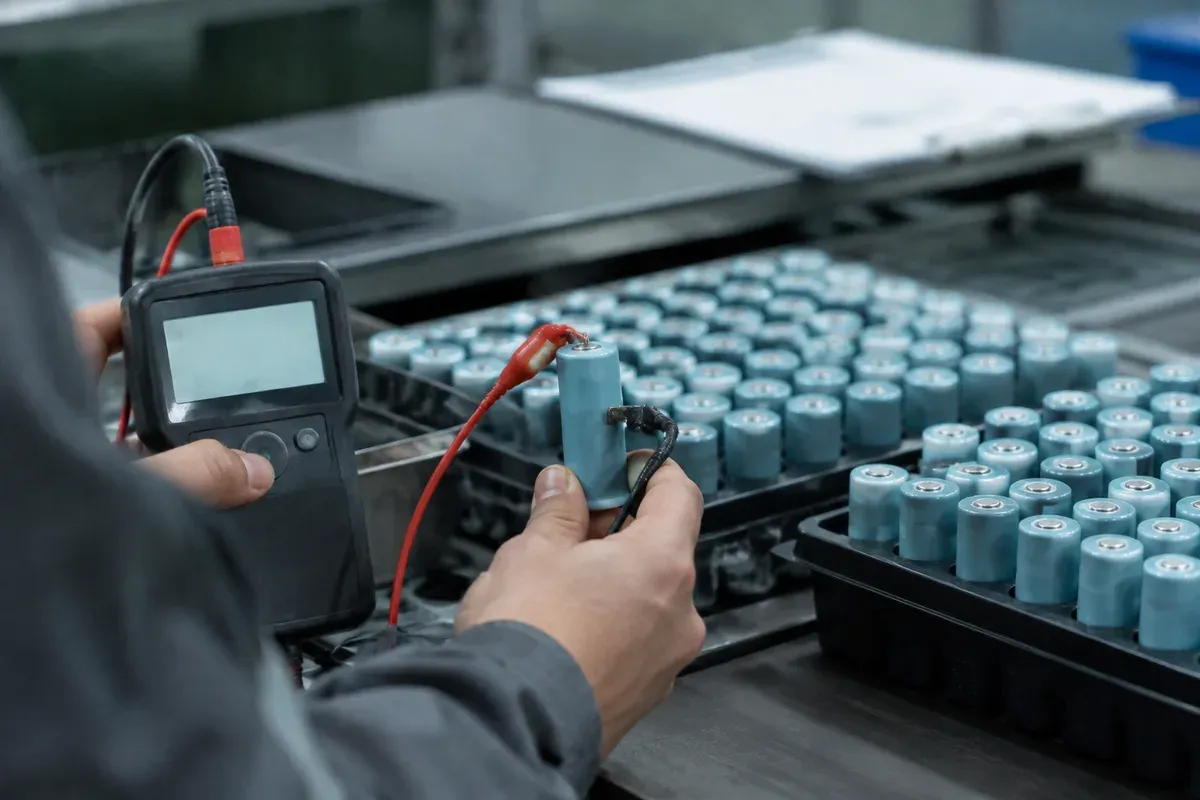
We measure internal resistance at incoming inspection alongside capacity, and quarantine cells outside specification. Where your application runs high sustained current or operates in cold markets, say so — it changes cell selection, not just pack size.
Working on a pack specification?
Send us the voltage, capacity, current draw, and target markets. We reply with a specification you can review rather than a price with no working shown.