Low-Temperature Charging Cutoff
A BMS rule that blocks or limits charging below a set temperature, protecting cells from the permanent damage cold charging causes.
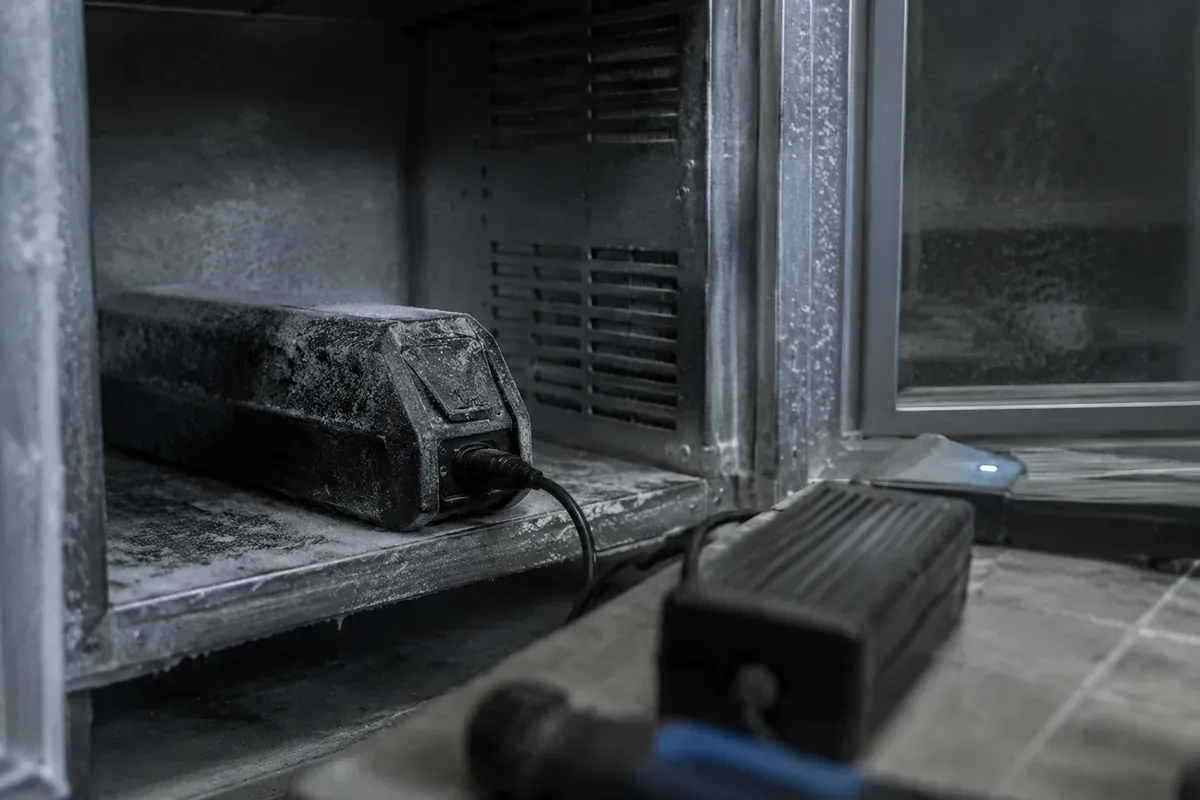
Why charging is the asymmetric risk
Lithium cells tolerate cold discharge reasonably well — you lose range and see more voltage sag, but the loss is temporary and returns with warmth.
Cold charging is different. Below roughly freezing, the anode cannot absorb lithium fast enough and it deposits as metal instead. That is lithium plating: permanent capacity loss and a real safety risk.
So the safe operating window is asymmetric. Discharge down to well below zero; charge only above it. Most cell datasheets state two different ranges for exactly this reason, and buyers frequently read only the discharge one.
What the cutoff does
A temperature sensor in the pack feeds the BMS, which enforces a rule:
- Below the threshold, refuse charge entirely
- In a band above it, allow reduced current
- Above that, charge normally
The refusal is what protects the cells. It is also what generates support calls, because a user plugging in a charger and seeing nothing happen assumes a fault.
Design it as a user-experience decision
This is the part worth deliberate thought rather than accepting a default.
Set the threshold too low or omit it, and packs degrade invisibly through winter. The claims arrive months later looking like premature failure, and they are impossible to attribute without temperature logging.
Set it too high, and users in cool climates cannot charge on an ordinary autumn morning. They conclude the battery is broken.
Either way the failure surfaces as a warranty conversation, so it deserves the same attention as any other user-facing behaviour. The mitigation is communication: an indicator or app message saying too cold to charge rather than silence.
Choosing a threshold you can live with
Tell us your coldest markets and where charging happens — heated indoor space, unheated garage, or outdoors at a depot. Also tell us what the display can show, so a blocked charge can be explained rather than merely refused.
Temperature protection is BMS firmware. It is set at specification, not adjustable in the field.
Working on a pack specification?
Send us the voltage, capacity, current draw, and target markets. We reply with a specification you can review rather than a price with no working shown.