Battery Management System (BMS)
The electronics that protect a lithium pack from overcharge, over-discharge, over-current and over-temperature, and keep its cell groups balanced.
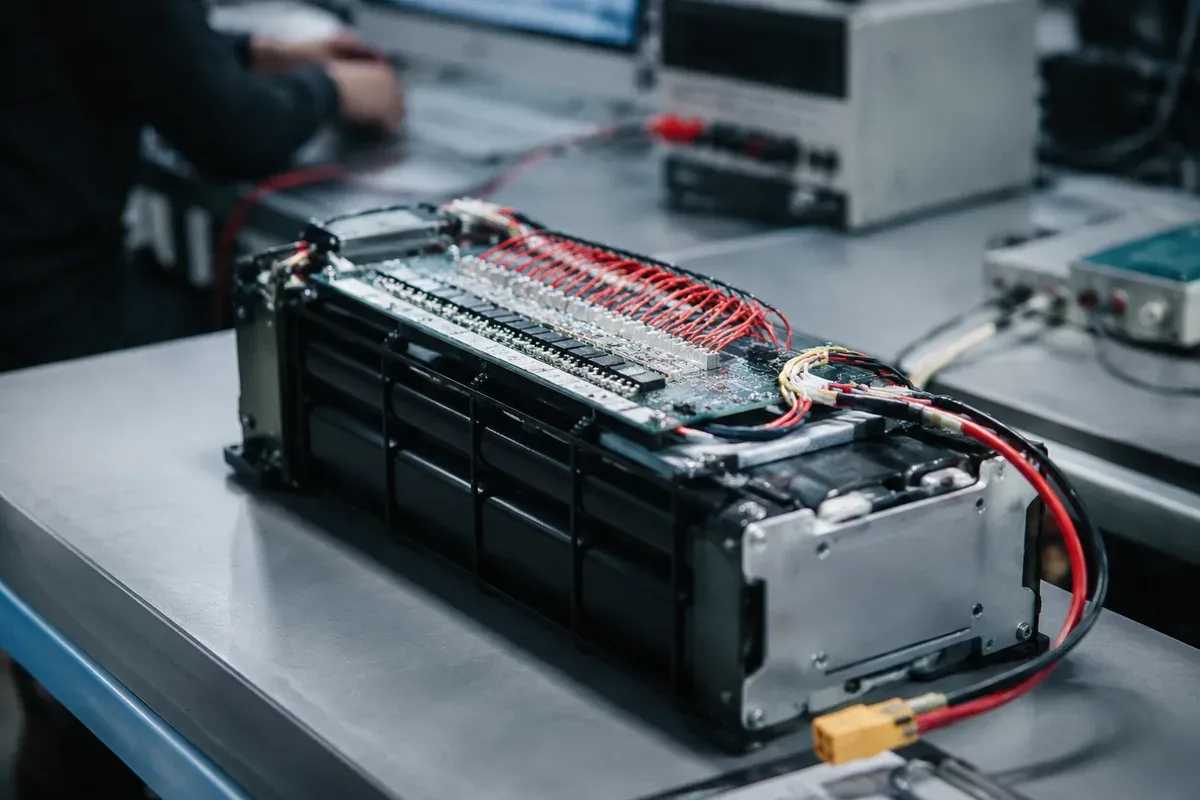
What it does
A lithium pack without a BMS is not a product, it is a hazard. The BMS sits between the cells and the outside world and enforces the limits the cells can survive:
- Overcharge protection — cuts charging when any cell group reaches its ceiling
- Over-discharge protection — disconnects the load before cells drop below their floor
- Over-current protection — limits continuous and peak draw
- Temperature protection — inhibits charge or discharge outside a safe window
- Cell balancing — equalises cell groups so the weakest does not define the pack
The protections operate on the weakest cell group, not the average. This is why a pack behaves as well as its worst group, and why cell matching at assembly matters so much.
Why it matters when sourcing
Two packs with identical cells and identical capacity can behave very differently because of the BMS, and it is the component buyers scrutinise least. The specification to interrogate is the continuous current rating, the cutoff thresholds, and whether the firmware can be configured to your controller rather than left at defaults.
A mismatch here produces the most common field complaint in this industry: a pack that cuts out under hard acceleration. That is usually not a cell problem. It is a BMS over-current threshold set below what the controller actually demands.
What to tell us about your controller
Give us the controller’s continuous and peak current draw, the over-discharge cutoff voltage you want, whether you need communication with a display, and the temperature window for your market.
Our BMS is designed in house, which means the firmware can be tuned to your build rather than selected from a catalogue of fixed variants. On OEM programs we can also implement a proprietary communication protocol so your display talks to your pack and not to a competitor’s.
Working on a pack specification?
Send us the voltage, capacity, current draw, and target markets. We reply with a specification you can review rather than a price with no working shown.