Bill of Materials (BOM)
The itemised list of every component in a pack — the document that turns a price into something you can actually verify.
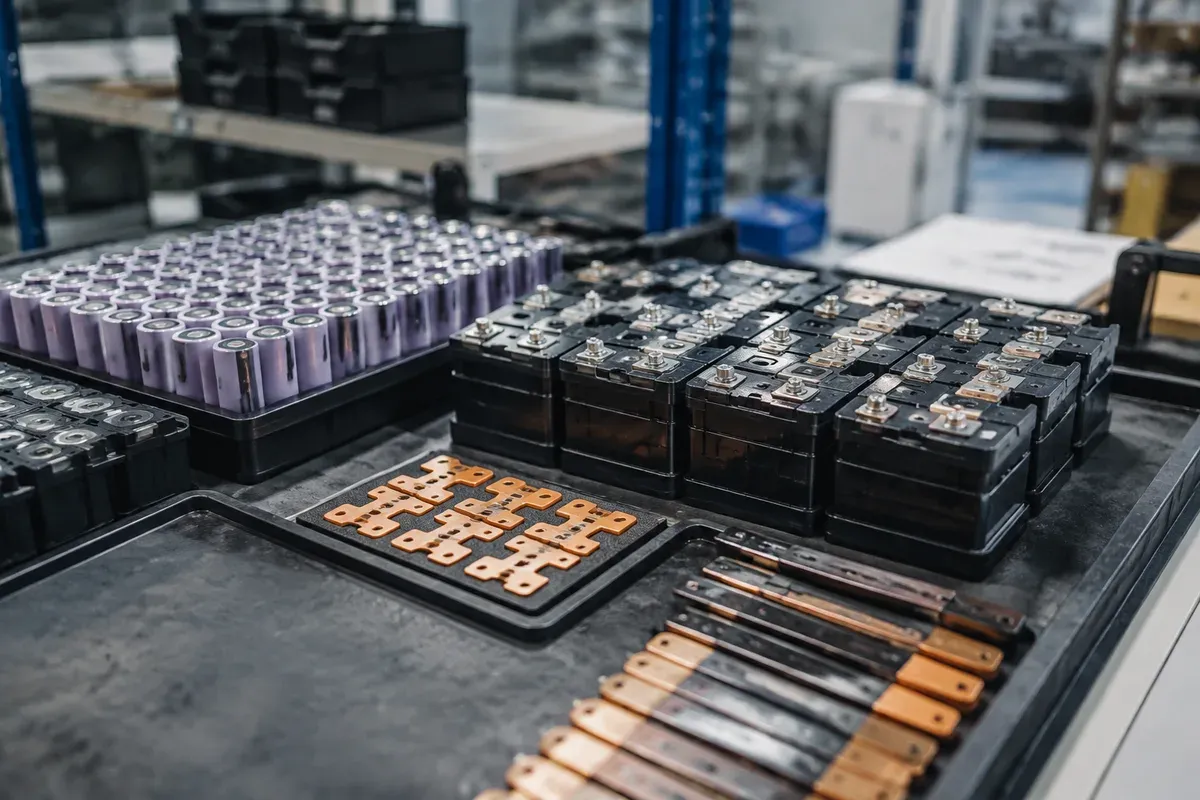
What a real BOM contains
Not a category list. Manufacturer part numbers.
For a battery pack that means the cell manufacturer and exact model, the BMS specification, nickel strip material and dimensions, connector part numbers, enclosure material, wiring gauge, and any potting or adhesive.
“Tier-1 cells” is not a BOM line. “Samsung INR21700-50E” is. The difference is that one can be checked against what arrives and the other cannot.
Why it is the buyer’s leverage
A quotation without a BOM is a number with no verifiable content, and it makes two things impossible.
Comparing suppliers. Two quotes differing by 20% may be the same pack with different margins, or genuinely different products. Without part numbers there is no way to know, and the cheaper quote often turns out to be nickel-plated steel where the other specified pure nickel, or an unbranded BMS where the other specified a known one.
Detecting substitution. Cost pressure and supply shortages both create pressure to swap a component. With a BOM, a substitution is a contractual event you approve. Without one, it is invisible — and a cell substitution can quietly invalidate the UN38.3 report, which covers a specific design.
Where it appears in the process
The BOM should be agreed at sample approval and frozen with the design. That is also when certification testing is run, which is why the two have to move together.
An “approved sample” without an agreed BOM approves an appearance, not a product.
How we handle it
CAD files and BOM are available on request under NDA on our OEM program, and production batches ship with a cell traceability report tying lot numbers and QC data back to what the BOM specified.
If a component must change — supply, obsolescence, or a genuine improvement — that is a conversation, not a silent swap. Ask every supplier you are evaluating to commit to the same, in writing. The sourcing guide covers the rest of that conversation.
Working on a pack specification?
Send us the voltage, capacity, current draw, and target markets. We reply with a specification you can review rather than a price with no working shown.