Self-Discharge
The slow loss of charge in a pack sitting unused, from internal chemistry plus whatever the BMS electronics draw while idle.
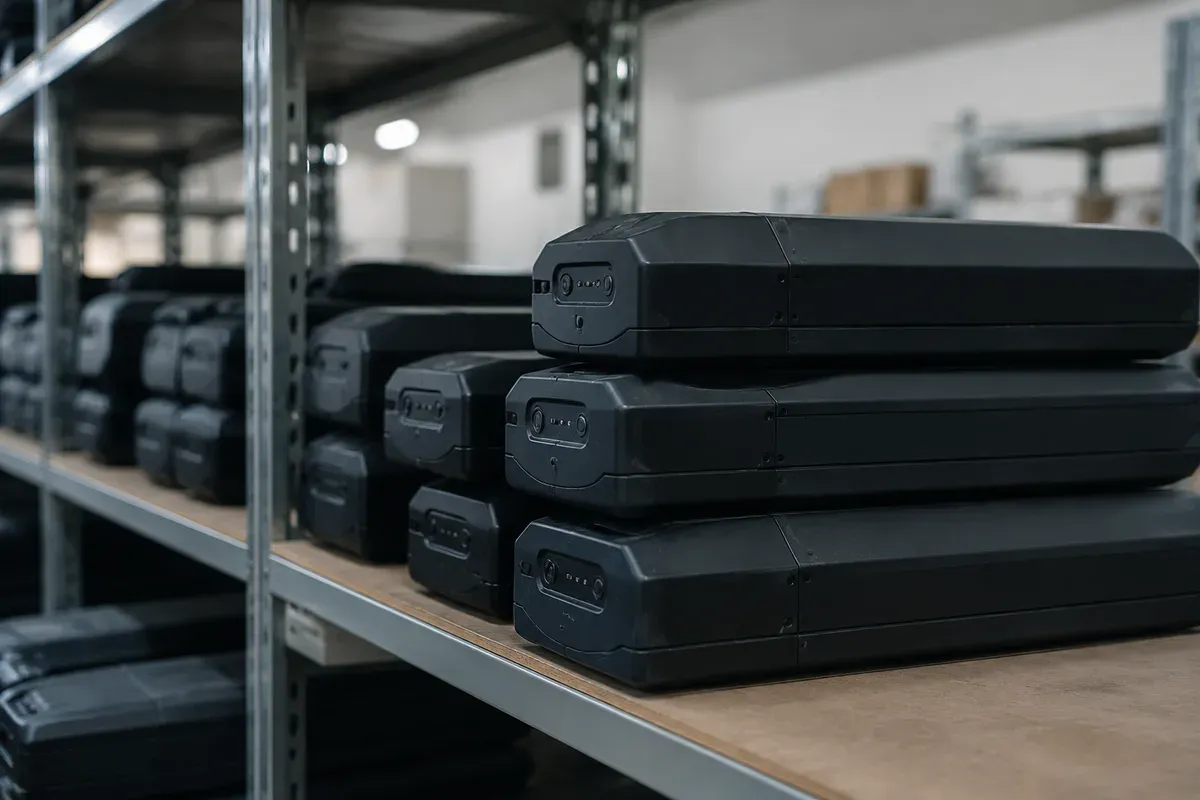
Two separate sources
Buyers often treat self-discharge as one number, but it has two components with different fixes.
Cell self-discharge is chemical and unavoidable. Quality lithium cells lose only a small percentage per month at room temperature, and the rate rises sharply with temperature — a pack stored in a hot warehouse loses charge much faster than the datasheet figure implies.
BMS quiescent draw is the electronics consuming power while the pack sits idle. On a poorly designed pack this dominates, and it is entirely a design choice rather than a law of chemistry. This is what a deep-sleep or low-power storage mode addresses: the BMS shuts down most of its own circuitry until woken by a charger or a switch.
Our 36V platform specifies an ultra-low self-discharge storage mode under 3% per month for exactly this reason.
Why it matters more than it sounds
The problem is not the lost energy. It is what happens at the bottom.
A pack left at low charge that continues to self-discharge can drop below the cell’s safe minimum. Below that point the cell may be permanently damaged, and many BMS designs will refuse to charge a pack that has fallen too far — protecting the user, and producing a battery that appears dead on arrival.
This is a real commercial problem in three situations: distributor inventory sitting through a slow season, retail display stock, and seasonal storage of a bike over winter.
Storage rules worth writing down
Store at partial charge, not full and not empty. A mid-range charge is the right resting state, for depth of discharge reasons as well as this one.
Store cool. Temperature is the biggest lever on the chemical component.
Specify a storage mode if your packs will sit in inventory, and write a recharge interval into your distributor instructions — a scheduled top-up every few months costs almost nothing and prevents an entire category of warranty claim.
Working on a pack specification?
Send us the voltage, capacity, current draw, and target markets. We reply with a specification you can review rather than a price with no working shown.